AI Showdown: A Comparative Analysis of the U.S. and China
11/7/20255 min read
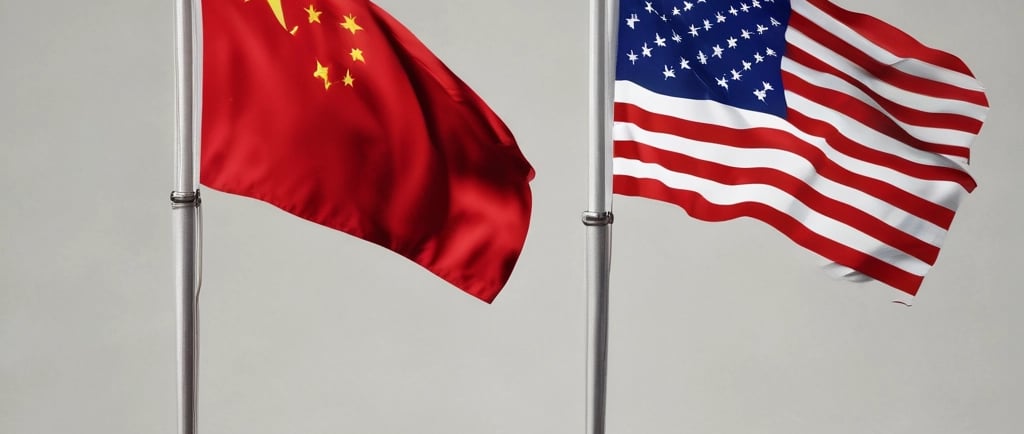
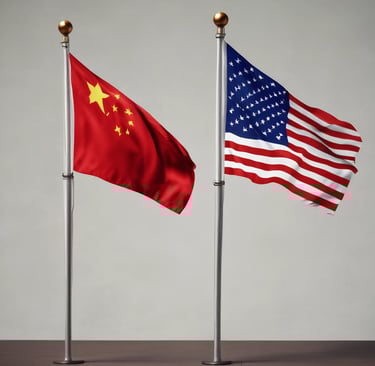
Technological Advancements in AI: The U.S. vs. China
The battle for supremacy in artificial intelligence (AI) technology has become a defining characteristic of the competitive relationship between the United States and China. The technological landscape in AI is characterized by notable innovations, particularly in the realm of AI chip manufacturing. U.S. companies, like NVIDIA, have established themselves as leaders in creating advanced chips tailored specifically for AI applications. These developments underscore the significant edge that American firms retain in research and development, facilitating the ongoing evolution of AI capabilities.
NVIDIA’s graphics processing units (GPUs) have been pivotal in not just gaming but also in AI research, machine learning, and deep learning applications. The company has continuously pushed the envelope in creating chips that can handle complex computations at lightning speeds. This capability allows researchers and developers in the U.S. to innovate rapidly, fostering an environment where new AI models and applications can emerge with increasing frequency. The sophistication embedded in U.S.-manufactured chips serves as a foundation for a range of technologies, including autonomous systems, natural language processing, and image recognition.
On the other hand, China's approach to AI technology has gained momentum, particularly through the significant investments made by its government and private sector in AI research and the development of its infrastructure. Chinese firms are advancing rapidly and have made notable progress in various AI applications. However, when it comes to the capabilities and technology available for AI chip production, U.S. firms currently maintain higher standards of innovation and product performance, largely due to their historical investments in research and development.
In this rapidly evolving landscape, while both countries are making strides, the United States appears to hold a key advantage in the AI chip-making industry. Continued investments in technology and research are crucial for maintaining this leadership position and navigating the future of AI innovation.
Economic Factors: Powering AI with Low Energy Costs
One of the most critical factors powering the growth of artificial intelligence (AI) in China is the nation's remarkably low energy costs. This economic advantage provides Chinese tech companies with a distinct edge, particularly in the development and operation of expansive AI data centers. The ability to maintain lower operational expenses facilitates not only the scaling of AI capabilities but also fosters rapid innovation within the sector.
Energy-intensive undertakings, such as training machine learning models and running complex algorithms, demand substantial computational power. In the context of AI, this translates to significant electricity consumption. Chinese energy prices, which are comparatively lower than those in the United States, enable companies to manage these costs more effectively. This situation allows Chinese firms to invest more resources into research and development, thus accelerating their pace in AI advancement.
Moreover, the Chinese government's strategic focus on AI as a pivotal economic driver further strengthens the infrastructure supporting low energy costs. The state has been known to subsidize energy prices for technology companies, which encourages sectors tied to AI development to flourish. By fostering environments that favor lower operational costs, China is effectively cultivating a fertile ground for AI growth. In contrast, many American companies face higher energy prices, which can deter substantial investment in energy-intensive AI projects.
Furthermore, the integration of renewable energy sources in China has started to play a significant role in sustaining its energy landscape. As the nation invests in cleaner technology, the ecological benefits paired with reduced energy expenditure make AI deployment even more advantageous. With this combination of low energy costs, governmental support, and technological innovations, Chinese AI companies are poised to scale their operations and enhance their global competitiveness, creating a dynamic landscape in which the U.S. must contend with significant economic disparities.
The Role of Algorithms: Unpacking Chinese Advancements
In the realm of artificial intelligence (AI), the efficiency of algorithms is pivotal to harnessing computational power. Chinese companies, particularly in recent years, have made remarkable strides in developing algorithms that not only innovate but also optimize performance on less sophisticated hardware. This ability to maximize the potential of existing resources allows for the implementation of advanced AI solutions in various sectors, from healthcare to robotics.
One significant area where Chinese firms have excelled is in the applications of deep learning algorithms. By fine-tuning these algorithms, they enable less capable systems to perform tasks that would typically require advanced computational frameworks. This contrasts sharply with U.S. firms, where a substantial focus is placed on hardware advancements, often leaving algorithmic efficiency secondary. Consequently, this approach in China leads to a more balanced advancement of AI capabilities, promoting innovation that can transpire even in environments with limited resources.
The implications of this algorithmic development are profound. As Chinese companies continue to refine their algorithms, they build not only competitive advantages in speed and cost but also expand the accessibility of AI technologies. This democratization can empower smaller businesses and regions traditionally overlooked in technology adoption, fostering an ecosystem of growth driven by AI. Moreover, the strategic prioritization of algorithmic efficiency positions China to challenge the established tech giants of the U.S., potentially reshaping the global competitive landscape.
As we examine the dynamics of AI development between the U.S. and China, the role of algorithms becomes increasingly pivotal. It is clear that advancements in AI are not solely defined by hardware capabilities but significantly by the algorithms that drive them. China’s focus on algorithmic optimization may well establish a new paradigm, influencing AI collaboration and competition on the world stage.
Resource Access and its Impact on AI Development
The development of artificial intelligence (AI) heavily relies on advanced hardware, and a critical component of this hardware is rare earth minerals. These minerals are essential for the production of various electronic components, including chips and batteries, which are foundational for AI technologies. In the global landscape, access to these rare earth resources is a significant factor that differentiates the AI capabilities of nations, notably the U.S. and China.
China possesses a formidable advantage in terms of rare earth mineral availability. The country accounts for a large proportion of the global supply, with its mines producing many of the critical minerals necessary for high-tech applications. This access enables Chinese companies to enhance their hardware manufacturing processes, reducing costs and improving efficiency in AI development. As a result, China’s superiority in securing these resources gives it a competitive edge in creating advanced AI systems, which could have profound implications for the future of global technology leadership.
Conversely, the U.S. faces challenges in sourcing rare earths domestically. Although efforts are underway to develop a more robust supply chain and reduce dependency on China, the transition takes time and significant investment. The reliance on imports for these essential materials can delay progress in AI hardware production, posing a potential disadvantage in the fast-evolving AI space. Furthermore, the geopolitical tension surrounding rare earths complicates the situation, as nations jockey for control over these strategic resources.
Overall, the intricate relationship between resource access and AI hardware capabilities highlights the importance of rare earth minerals in shaping national AI strategies. The competition between the U.S. and China for dominance in this sector is indicative of a broader technological rivalry, one that will undoubtedly play a significant role in the future trajectory of AI development.
Contact
Get in touch
Subscribe
info@lightyearstar.com
© 2025. All rights reserved.